Case study
SquadBrain: making roster memorization feel like a competitive game.
A mobile product build that combines practice loops, quick-match competition, achievements, ELO-style movement, and validation-sensitive game logic.
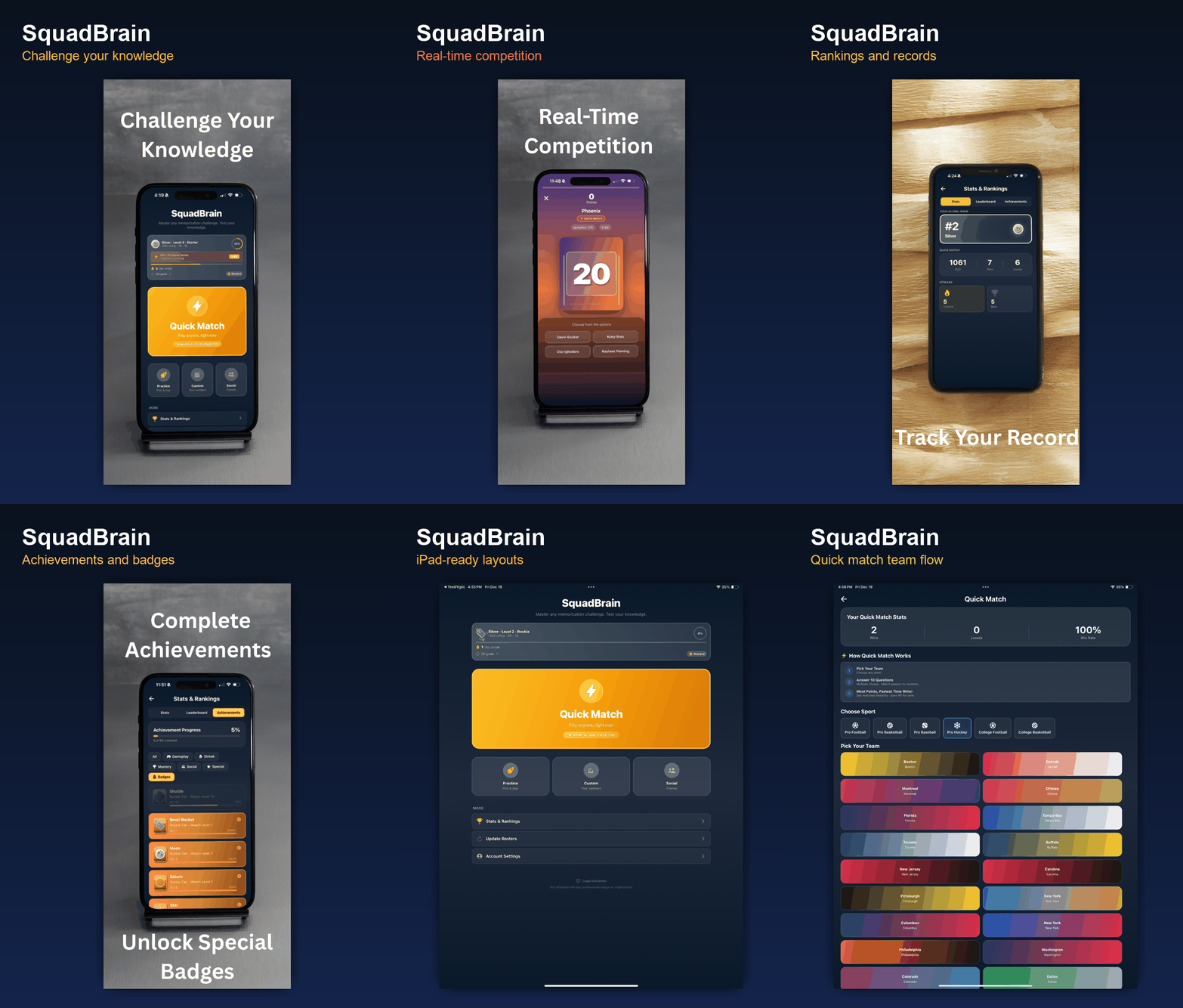
Not just a demo screen — a loop with rules behind it.
SquadBrain is presented as a product system: fast mobile interaction, adaptive practice priority, match selection, and validated competition outcomes.
The problem
Roster knowledge is usually treated like static trivia. The product opportunity was to make memorization repeatable: short rounds, visible progress, competition, rank movement, and reasons to return.
System decisions
Local-first gameplay
Fast mobile interactions stay local so the practice loop never feels blocked by network latency.
Trusted competition boundary
Competitive submissions are recomputed and risk-flagged before ranking updates.
Adaptive practice
Practice priority uses due state, misses, stability, recent exposure, and prompt mix rather than random questions.
Code worth inspecting
- adaptive-practice.ts — prioritizes practice cards and explains the reasons.
- result-validation.ts — validates session submissions and risk-flags suspicious results.
- matchmaking.ts — ranks same-team candidates by rating gap and wait time.
- CI workflow — type-checks and runs the example test suite.
Capabilities demonstrated
Product UX plus competitive-system logic.
Mobile product sense, TypeScript organization, game-state modeling, ranking logic, validation boundaries, testing discipline, and the ability to package a consumer app for evaluation.